Setting Cabinets on Out-of-Level Floors in Clay-Soil Neighborhoods
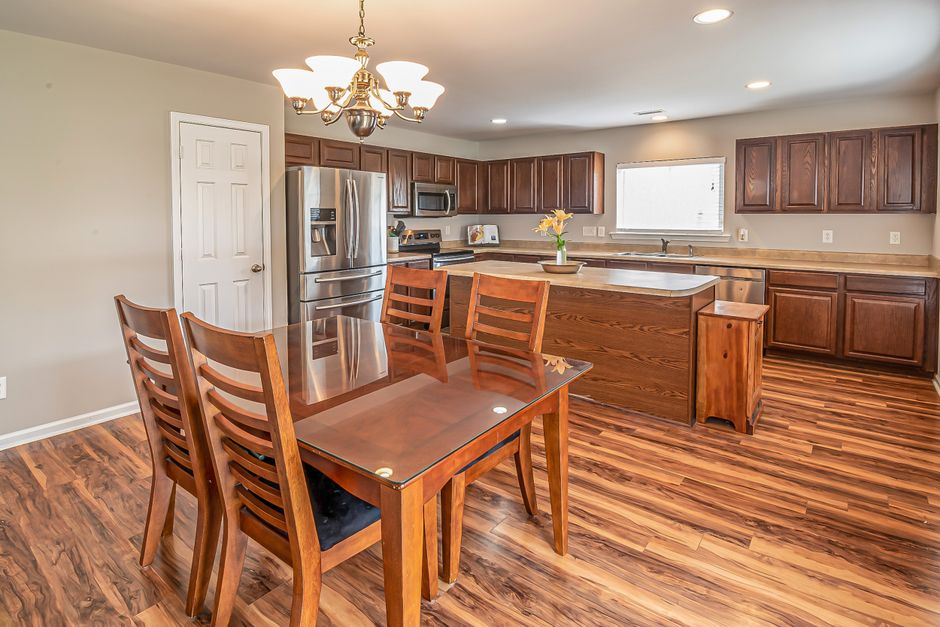
Two kitchens that look equally flat to the eye can differ by an inch across the same ten feet, and only one of them will let a cabinet sit true without work. A bowed wall shows up at the backsplash, as the notes at kitchen cabinets austin safety in construction show describe, and a floor that dips toward the middle of a room does the same thing at the toe kick. Austin, TX has plenty of both.
Why the floors move
East of the Balcones Fault the soil is shrink-swell clay. It takes on water in a wet spring and shrinks in a dry August, and a pier-and-beam or slab foundation follows it. Houses from the 1940s to the 1960s in Clarksville, Hyde Park and Travis Heights have had decades of that cycle, so a kitchen floor can slope in one corner and rise in another.
Find the high point first
A crew snaps a level line around the room and finds the highest spot on the floor under where the base cabinets go. Every base box is set off that mark. Setting from a corner instead of the high point leaves the far end of the run floating, and the counter ends up with a gap under it that has to be faked later.
Shim, then fasten
Boxes are shimmed under the front and back rails until the top is level in both directions, then screwed to each other through the face frame or the sides of the carcass. Shims go at every screw location into the wall studs, or the cabinet pulls out of true when the screw tightens. A plywood box holds a screw and a shim cleanly, while a thin mdf side can dent and shift.
Scribing to a wall that is not straight
A scribe strip is a deliberate extra piece of material on the cabinet edge. The installer runs a pencil along the wall to copy its curve, then sands or planes the strip to match. Doors on a face frame cabinet get a tight, even gap this way. Frameless boxes have less to scribe, so a wall that bows badly may need to be skimmed flat with joint compound first.
Even door gaps
Once the boxes are level and tied together, the doors are hung and adjusted. A euro hinge moves a door up, down, in and out, which is how an installer pulls the gaps even after the shimming is done. If the hinge runs out of adjustment, the box is out of true, and the fix is at the shim, not the door.
The last step is the toe kick, a thin skin cut to the real profile of the floor so a dip or a rise does not show as a dark gap under the run.